
If you’ve lived in Pune long enough, you don’t really need market reports to know where the city is heading. You feel it in smaller ways—where traffic suddenly feels heavier, where cafés pop up overnight, where familiar roads start looking unfamiliar.
Right now, that momentum is unmistakable along one corridor: Pimple Nilakh to Hinjewadi.
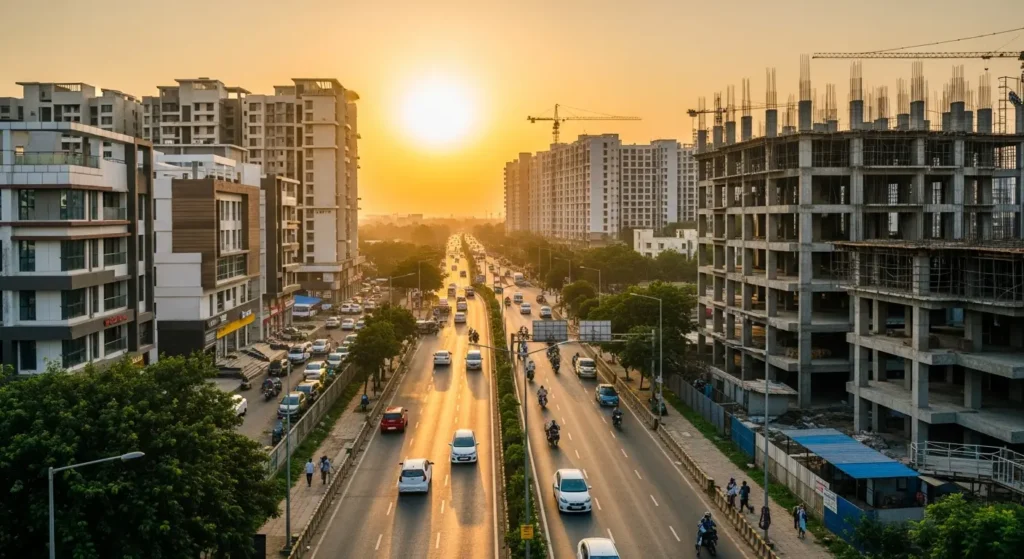
This entire stretch feels like a city within a city. Not too long ago, it was quieter. More residential. Less rushed. Today, it feels alive—busy, ambitious, and constantly evolving. New residential projects, packed cafés, co-working spaces, and young professionals moving in almost every month.
And the reason is simple. This belt offers something rare in urban India: a genuine balance of workplace proximity, lifestyle convenience, and long-term real estate appreciation—without feeling overwhelming.
How Hinjewadi’s IT Growth Changed the Real Estate Game
The real turning point for this region was Hinjewadi IT Park.
As global IT companies expanded here, one big shift happened—people stopped wanting to travel to work and started wanting to live near it. Not just for convenience, but for quality of life. Spending hours in traffic every day isn’t sustainable.
So professionals began moving closer—to Pimple Nilakh, Wakad, and Pimple Saudagar. Slowly, these areas stopped being “fringe locations” and became some of Pune’s most searched residential investment hotspots.
What’s interesting is how organic this growth has been. It wasn’t driven by hype-heavy advertising. People came for jobs. Families followed. Then came schools, hospitals, malls, cafés, and social infrastructure.
That kind of natural growth tends to last—and that’s exactly why investors trust it.
Connectivity That Actually Makes Daily Life Easier
One of the biggest strengths of the Pimple Nilakh–Hinjewadi corridor is connectivity.
- Easy access to Mumbai–Bangalore Highway
- Smooth links to Baner, Aundh, University Circle, and central Pune
- Faster routes for weekend getaways outside the city
With metro connectivity plans gradually taking shape, the future looks even smoother. Once public transport improves, commute times drop—and property demand usually rises.
For many professionals today, this belt already feels more accessible than older, more congested parts of Pune.
A Lifestyle That Feels Balanced, Not Forced
This is not just an “office zone”.
Yes, IT parks are nearby—but so are good schools, multi-specialty hospitals, shopping malls, gyms, cafés, parks, and wellness spaces. It feels like an area designed for living, not just sleeping after work.
That balance matters more than people realize. Because buying a home in Pune isn’t just about square footage. It’s about:
- Your daily commute
- Weekend plans
- Evening walks
- Where your kids study
- How stressed—or relaxed—you feel
And in this corridor, life feels manageable.
Homes That Fit Every Stage of Life
Another reason this belt continues to perform well is flexibility.
You’ll find:
- Compact apartments for young professionals
- Family-sized homes near schools and parks
- Premium residences for buyers who value space, privacy, and long-term comfort
This mix keeps the community diverse and the rental market strong. Whether it’s IT professionals, newly married couples, or families relocating within Pune—demand never really disappears.
This is also where trusted developers like Venkatesh Buildcon have been focusing—creating thoughtfully planned residential projects that align with how people actually live today, not just how brochures promise.
Why are astute investors taking notice?
For real estate investment, this area makes sense without requiring complex calculations.
- stable workplace
- Consistent housing demand
- Continuous upgrades to infrastructure
- Reputable builders starting top-notch projects
- High rental returns in locations with IT infrastructure
Unlike speculated zones, this sector is focused on actual requirements including housing, work, and leisure. As a result, experienced investors often prefer it to more gaudy but untrustworthy locations.
It may not promise overnight gains. But it delivers steady, predictable property appreciation, which is usually the smarter play.
Yes, There Are Challenges—and That’s Normal
No area is perfect.
Traffic during peak office hours can be frustrating. Some pockets still face monsoon drainage issues. Certain internal roads feel stretched due to rapid development.
But these aren’t red flags—they’re growing pains.
In fact, they often indicate areas that are still evolving, which means there’s room for improvement—and opportunity. The key is choosing the right micro-location. One street can feel calm and green, while the next feels chaotic.
That’s where local insight matters more than online listings.
What the Future Looks Like
The future of the Pimple Nilakh to Hinjewadi real estate corridor feels almost inevitable.
More offices. Better public transport. Smarter residential planning. Greater focus on sustainability and green spaces.
As Pune expands, this belt will gradually stop feeling “peripheral” and start feeling central.
People who invest here today won’t just own property—they’ll own location relevance, and that only becomes stronger with time.
Final Thoughts: Practical, Promising, and Livable
The Pimple Nilakh–Hinjewadi stretch isn’t popular because of marketing. It’s popular because it works.
It works for professionals seeking shorter commutes.
Families searching for local schools and medical facilities can use it.
It works for investors that seek stability over speculation.
Most importantly, it works for people who want a balanced life—not too crowded, not too isolated, not overpriced, and not boring.
In a city growing as fast as Pune, that kind of balance is rare.
If you’re searching for a future-ready residential location in Pune, this corridor deserves serious attention—not because it’s trending, but because it genuinely makes sense.