 Residential
 Ongoing
 Completed
 Upcoming
 Commercial





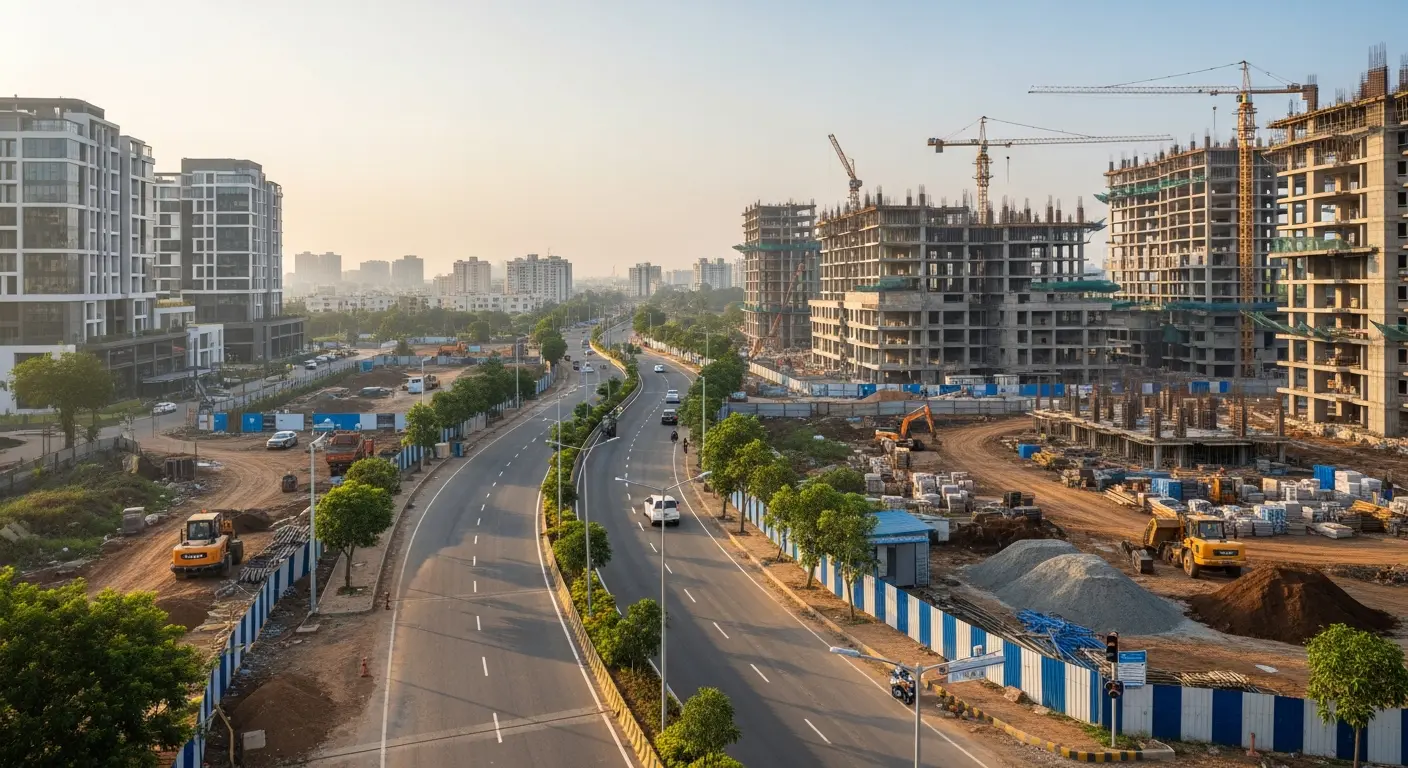
Pune has consistently demonstrated a capacity for layered development. Some areas grow slowly over decades, while others seem to transform almost overnight. Among all the changing pockets of the city, the stretch from Pimple Nilakh to Hinjewadi feels different. Not louder, not flashier — just more certain.
It’s the kind of place where growth doesn’t feel forced. It feels natural.
Over the years, this belt has slowly shifted from being a collection of scattered neighborhoods into a continuous urban ecosystem. What once felt like separate localities now feels like one connected lifestyle zone, shaped by work culture, infrastructure, and changing aspirations.
From Residential Pocket to Urban Spine
Earlier, people saw Pimple Nilakh, Wakad, and Hinjewadi as independent areas. You lived in one and worked in another. Commute was a daily reality you simply accepted.
Today, that line is blurred.
The same corridor now hosts homes, offices, cafés, schools, gyms, hospitals, and shopping spaces — all within reach. People don’t just pass through this belt anymore. They build their entire life around it.
This shift didn’t happen because of one big project. It happened because everything grew together.
Work came first. Then housing followed. Then lifestyle spaces. Then social infrastructure. And now, it feels complete.
The IT Effect Is Real, But Not the Whole Story
Yes, the tech ecosystem played a major role in shaping this corridor. A lot of people worked at the big IT campuses. That created demand for rental homes, which later turned into demand for owned homes.
But what kept people here wasn’t just jobs.
It was convenience.
Shorter commutes. Better roads. More options for daily needs. A sense that you don’t need to travel across the city for everything.
Over time, people stopped seeing this area as “near work” and started seeing it as “home”.
That emotional shift is what truly drives real estate growth.
Why Families Are Choosing This Belt
A big change in this corridor is the type of buyers it attracts today.
Earlier, it was mostly young professionals. Now, it’s families.
Parents like that schools and health care are easy to go to. Couples adore the extras that come with living there. Kids develop up in gated neighborhoods that have parks and places to play. Well-planned neighborhoods make even older people feel better.
The attractiveness to people of all ages keeps the corridor stable. It’s not dependent on one type of buyer or one industry.
It feels balanced.
Lifestyle Has Become the Real Currency
Modern homebuyers are no longer obsessed with just square footage or luxury labels. They care about how life feels on a daily basis.
Can I walk to a café?
Is my gym close by?
Are grocery stores nearby?
Do I waste time in traffic every day?
The Pimple Nilakh to Hinjewadi stretch answers most of these questions positively.
That’s why people stay.
Not because it’s trendy. But because it’s practical.
Builders Are Designing for Real Life Now
Another reason this corridor feels mature is the way new residential projects are being planned.
Instead of just tall buildings, there’s focus on community spaces. Instead of isolated towers, there are integrated layouts. Instead of selling only luxury, developers talk about livability.
Builders like Venkatesh Buildcon are clearly responding to a new kind of buyer — someone who wants comfort, not just status.
Eco-friendly materials, better ventilation, open spaces, walkable zones, and smarter layouts are slowly becoming standard, not premium.
This corridor is ready for the future because of the move toward sustainable construction that puts people first.
Rental demand seems real, not fake.
Consistent rental demand is a major sign that a real estate area is robust.
Rental demand doesn’t go up because of buzz in this area. It stays steady because people genuinely want to live here.
Employees move in for work. Families stay for lifestyle. Students stay for education. Entrepreneurs stay for opportunity.
This mix creates a stable rental ecosystem. Not volatile. Not speculative.
Just dependable.
Challenges Exist, But They’re Normal Urban Problems
No fast-growing area is perfect.
Traffic can get heavy. Construction can feel endless. Some pockets feel overdeveloped. Others still lack planning.
But these aren’t warning signs. They’re symptoms of growth.
The difference is how quickly issues get addressed.
In this corridor, infrastructure keeps improving. Roads expand. Public transport evolves. Social spaces multiply. The area keeps adapting.
That’s what makes long-term confidence possible.
Why Investors See This as Low-Stress Growth
For investors, the biggest fear is uncertainty.
Will people want to live here?
Will the area remain relevant?
Will demand sustain?
In this belt, those questions feel easier to answer.
The presence of jobs ensures continuous demand. The lifestyle ensures retention. The infrastructure ensures long-term value.
It’s not a risky bet. It’s a logical one.
Not explosive growth. But steady, reliable appreciation.
The kind that builds wealth quietly.
The Future Feels Predictable — In a Good Way
Most emerging areas feel chaotic. You don’t know what they’ll become.
This corridor feels different.
You can already see its future.
More integrated communities. Better connectivity. More sustainable developments. More families. More professionals choosing to stay instead of relocate.
It doesn’t feel like a gamble. It feels like an evolution.
Final Thoughts: Growth Without Noise Is the Best Kind
The Pimple Nilakh to Hinjewadi stretch isn’t trying to be the next big thing.
It already is.
Just without the noise.
It is robust because it establishes equilibrium between work and leisure, growth and comfort, as well as hope and security.
It is beneficial for individuals seeking to purchase a residence.
It gives families a sense of safety.
It gives investors peace of mind.
For Pune itself, this is a form of urban expansion that really works, not just hoopla, but meeting real needs.
The most rewarding real estate deals aren’t often the ones that draw the most attention.
They just make sense.